Tire Science Explained: Why Racing Slicks, Road Tires, and Track Day Tires Rely on Completely Different Physics
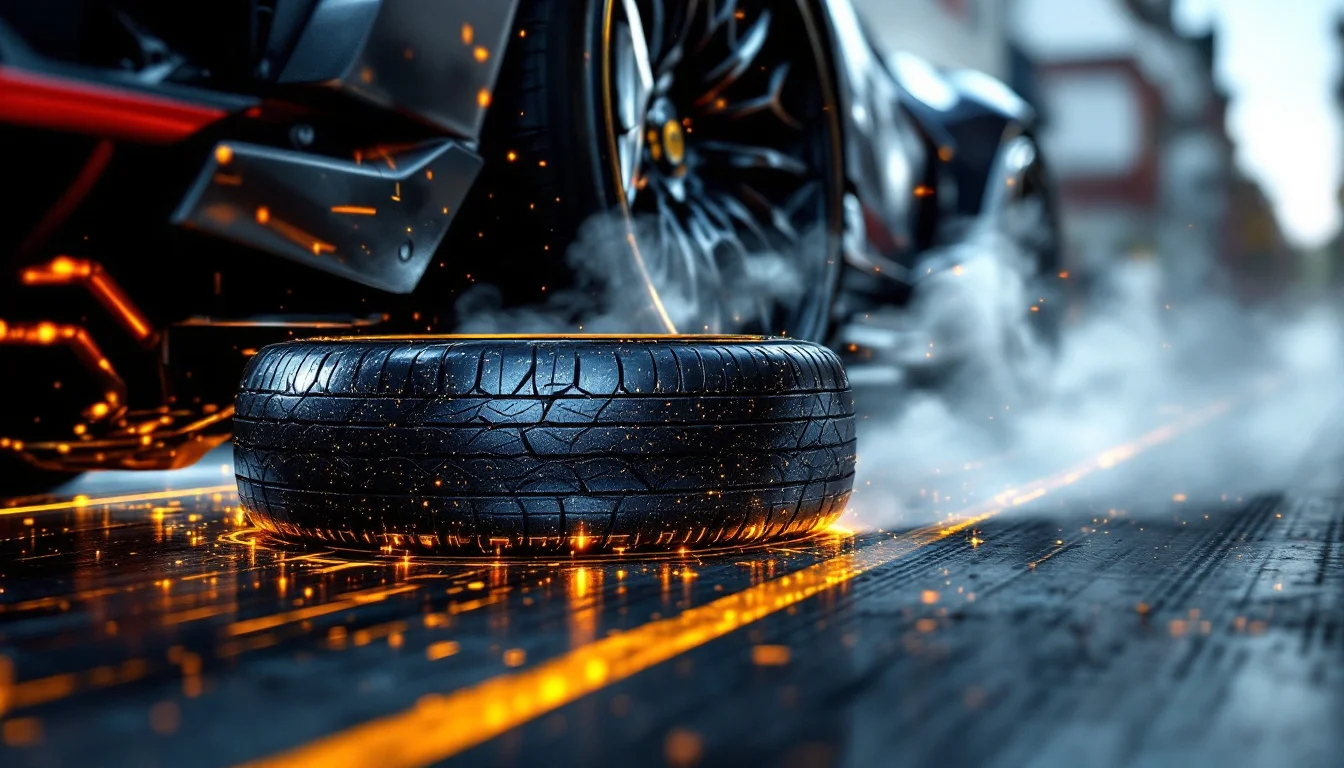
A paradox sits at the heart of automotive engineering: if on smooth, dry racing surfaces, slick tires offer the highest level of dry grip, why do everyday road cars utilize deeply grooved, complex tread patterns? The answer lies far beyond simple water displacement. Tire grip is not a singular physical phenomenon, but rather a fierce competition between two entirely different scientific mechanisms.
At the extreme ends of the performance spectrum, engineers must choose between maximizing pure thermal friction and engineering precise mechanical interlocking. What works to anchor a race car to a perfectly prepared circuit relies on a thermodynamic state that is physically impossible to achieve during a morning commute. Conversely, the structural flexibility that keeps a passenger car safely planted on an irregular public road would lack the rigidity required for stable high-speed cornering on a track. By examining the physics driving full racing slicks, compromise-focused track day tires, and everyday road rubber, we can decode the hidden science of how vehicles actually connect to the pavement.
Key Takeaways
- Thermal Friction vs. Mechanical Grip: Racing tires rely on extreme heat to create chemical friction, while street tires utilize engineered tread edges to mechanically interlock with microscopic road irregularities.
- The Heat Barrier: Full racing slicks offer very little traction when cold, feeling like hard plastic until optimal operating temperatures are reached.
- The Lightweight Car Exception: Semi-slicks are often preferable for lightweight sports cars (like Miatas and BRZs) because these vehicles cannot generate the sustained mechanical load required to keep standard full slicks at operating temperature.
- Structural Engineering: Sidewall rigidity dictates both performance and comfort, with racing tires utilizing ultra-stiff walls to prevent flex, while road tires act as a secondary suspension system.
Friction vs. Interlocking: The Hidden Physics of Grip
The fundamental science of how rubber meets the road reveals a conflict between two distinct physical theories of adhesion. Resolving this conflict requires understanding the precise nature of the surface the vehicle is traveling over. According to technical documentation from Hankook, dry grip on slick racing tires is achieved by having every single inch of rubber in direct contact with the track surface. By eliminating the tread pattern entirely, slicks maximize the overall contact patch, allowing pure friction to dictate traction on exceptionally smooth racing circuits.
The Mechanical Interlocking Theory
However, public roads present a vastly different physical environment. An analysis of tire science by Rene Herse — drawn originally from bicycle-tire research — notes that real-world grip at the tire-road interface is created not just by friction between rubber and asphalt, but by mechanical interlocking. Because everyday pavements are constructed from countless small, embedded stones, a perfectly smooth tire may struggle to find purchase on irregular surfaces.
Adding many small, stiff edges to a tire's design can increase the number of interlocking contact points with these road irregularities. The Rene Herse analysis emphasizes that these tread edges must be engineered to be stiff enough so that they do not fold over when pushing against the micro-stones in the asphalt.
Synthesizing the Grip Conflict
The tension between these two principles — maximizing flat surface area versus multiplying interlocking edges — helps explain why slick tires do not uniformly dominate in all dry conditions. While perfectly maintained, smooth racing circuits allow pure thermal friction to reign supreme, unpredictable public roads demand mechanical interlocking to grip surface irregularities.
This counter-intuitive reality is supported by practical testing on irregular surfaces, though the available evidence comes from bicycle-tire research rather than automotive testing. The author of the Rene Herse analysis, Jan Heine, reports that in his own bicycle riding experience, slick tires actually gripped less effectively than tires with a tread pattern. In one specific instance, Heine experienced a front-wheel loss of grip on a wet descent while riding on shaved slicks. This real-world anecdote — in a bicycle context — highlights how a pure friction approach can struggle on imperfect pavement. However, directly extrapolating this to automotive tires is misleading, as cars have vastly larger contact patches and greater tire deformation, which fundamentally alters the dynamics of mechanical grip.
Racing Slicks: The Thermodynamics of 'Chewing Gum'
Full racing slicks operate on physical principles that render them entirely alien to everyday driving. Rather than relying on tread geometry, their adhesion is fundamentally thermodynamic.
The Heat Requirement
According to US tire retailer RNR Tires, racing tires are constructed using highly specialized, very soft rubber compounds. These materials are engineered to become extremely sticky only when subjected to immense heat, allowing for aggressive grip during high-speed cornering.
However, this specific chemical formulation comes with a severe operational limitation. RNR Tires notes that racing tires are functionally useless when cold. Without high heat — reaching optimal temperature windows that vary widely depending on the specific compound — the rubber offers very little grip and literally feels like driving on hard plastic. This absolute dependence on high temperatures means the tires must be kept inside a critical thermal window to function properly.
Structural Rigidity and Limitations
Beyond the rubber compound, the internal architecture of a slick is built for extreme lateral forces. RNR Tires states that racing tires feature extremely stiff sidewalls that prevent the tire from flexing or rolling over during high-speed cornering. This rigidity maximizes contact patch stability but comes at a severe cost to comfort, resulting in a harsh, vibrating ride where the driver feels every single bump and crack in the surface.
Furthermore, the total lack of tread grooves creates an absolute vulnerability to moisture. Full slicks should never be used in wet conditions, as they lose all water evacuation capability and pose a severe hydroplaning risk at speed. If there is any chance of rain, switching to a treaded alternative is strongly advised to maintain safety and predictability. Finally, the soft, sticky nature of these racing-type compounds drastically increases rolling resistance, meaning they wear down remarkably fast and would severely penalize fuel efficiency if utilized outside a racing context.
Semi-Slicks (R-Compounds): The Track Day Sweet Spot
For automotive enthusiasts who drive their vehicles to a circuit, pure racing slicks present logistical and physical challenges. This gap in the market is filled by semi-slick tires, commonly referred to as R-compounds or track-ready tires.
Bridging Track and Street
Hankook describes semi-slicks as the crucial middle ground between standard street tires and full racing slicks. They feature minimal tread patterns, which allows them to offer exceptionally high dry-performance grip while retaining some wet traction capabilities and longer durability than a pure racing compound.
In the United States, minimal tread often allows semi-slicks to be DOT-compliant and thus street-legal, depending on the specific model. Regulations vary by jurisdiction and prospective buyers should verify local requirements before use on public roads.
The Lightweight Car Advantage
An important scientific application of semi-slicks involves vehicle mass. It is a common misconception that every track car benefits from a full slick. Lightweight sports cars — such as Mazda Miatas, Subaru BRZs, or Honda S2000s — often find semi-slicks to be a more practical choice.
The physics behind this are tied directly to the thermodynamic requirements of racing rubber. Everyday lighter vehicles lack the extreme mass and downforce required to generate enough mechanical load to keep standard full slicks heated to their optimal operating range for an entire track session. A semi-slick, which requires less extreme heat to activate its chemical grip, becomes the superior choice, allowing lightweight cars to maintain consistent traction without falling out of the optimal temperature window.
Road Tires: Engineered for the Cold Reality
Everyday street tires must solve a completely different set of physical problems than track tires. Instead of maximizing peak grip for a short race distance on a perfectly smooth surface, they must safely transport heavy vehicles across unpredictable terrain for years.
Chemical Resilience and Longevity
The foundational difference lies in the rubber compound itself. RNR Tires indicates that street tires utilize significantly harder rubber compounds engineered specifically for longevity. The average commuter drives 10 to 50 miles daily, which is why street-tire durability matters for maintenance costs. To achieve this, manufacturers blend distinct chemical additives into the rubber, primarily silica and carbon black. These additives play complementary roles: carbon black improves durability and abrasion resistance, while silica enhances wet grip and lowers rolling resistance. A good set of all-season street tires typically lasts 40,000 to 60,000 miles — with some specialized touring models reaching up to 80,000 — withstanding constant friction against harsh public asphalt without disintegrating.
Immediate Safety and Efficiency
Unlike track rubber, public road safety relies on immediate physical responsiveness. Street tires are specifically designed to work safely immediately from a cold start, operating across a remarkably wide temperature range without requiring any warm-up laps to activate their grip.
Furthermore, the physics of road tires are heavily dictated by modern economics and fuel efficiency mandates. While the soft, sticky compounds of racing tires actively increase rolling resistance — forcing the engine to work harder to maintain speed — street tires are explicitly designed to maintain low rolling resistance. This precise balance of interlocking tread geometry, harder silica-infused rubber, and structural flexibility ensures the vehicle maintains optimal fuel economy during daily commutes.
The Tire Science Comparison Matrix
| Tire Category | Dominant Grip Science | Operating Temperature Window | Sidewall Rigidity | Hydroplaning Risk |
|---|---|---|---|---|
| Full Racing Slicks | Pure Thermal Friction | Requires extreme heat | Extremely stiff (prevents flex/roll) | Absolute (unsafe in wet) |
| Semi-Slicks (R-Compound) | Hybrid (Friction + Interlocking) | Moderate heat activation | Moderately stiff | High (minimal tread patterns) |
| Standard Road Tires | Mechanical Interlocking | Safe immediately from cold start | Flexible (acts as secondary suspension) | Low (deep water channels) |
This framework highlights how improving a specific variable, such as lowering the hydroplaning risk through deeper tread, inherently compromises the pure thermal friction available for dry track performance.
FAQ: Demystifying Tire Science
Why do heavy cars perform better on full slicks than light cars?
Heavy vehicles generate substantially more mechanical load and downward force during cornering and braking. According to Hankook, this massive transfer of kinetic energy easily generates the extreme friction required to push a slick tire into its optimal thermal range. This makes heavier platforms structurally better suited for maintaining the heat needed to keep racing compounds sticky.Why do street tires have small cuts in the tread blocks?
These microscopic cuts, known as sipes, exist to amplify mechanical grip. By adding many small, stiff edges to a tire's design, the total number of interlocking contact points with the small embedded stones in everyday pavement is multiplied. This allows the tire to mechanically grab road irregularities, maintaining grip even when pure friction fails.Why do professional drivers aggressively weave behind a safety car?
This erratic-looking behavior is purposefully done to generate mechanical friction. Because full racing slicks offer minimal traction and feel like hard plastic when cold, drivers must weave to warm the tires and keep them inside their critical thermal window during slow-speed caution periods.Conclusion
The science of connecting a vehicle to the pavement remains an intricate balancing act between the thermodynamic realities of thermal friction and the tangible necessity of mechanical interlocking. By understanding the precise nature of the surface a vehicle is traveling over, engineers can calculate the exact ratio of stiff mechanical edges to heat-activated rubber compounds required to keep a vehicle planted. Consequently, tire engineering will remain a dynamic discipline where every millimeter of tread represents a highly calculated compromise.