From Track Innovation to Tax Reality: What Formula E and 2026 Tax Hikes Mean for Flemish EV Drivers
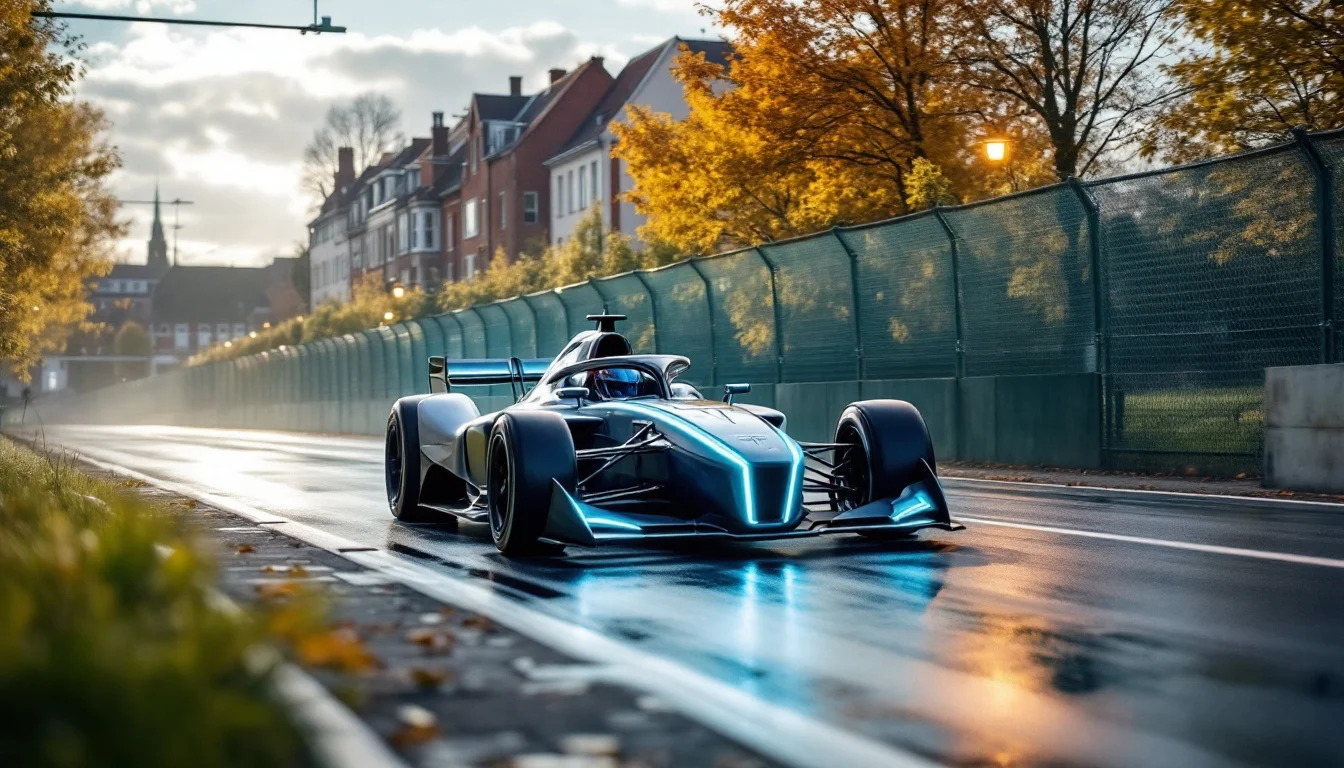
High-performance electric vehicle technology has reached a significant performance benchmark. According to FIA Formula E data, the GEN3 Evo is now the quickest-accelerating FIA single-seater ever built. The governing body notes that this machine is capable of sprinting from 0-60 mph in 1.82 seconds—or 0-100 km/h in 1.86 seconds—and that it accelerates significantly faster than a current Formula 1 car. This motorsport milestone highlights the dynamic capabilities of high-performance battery-electric powertrains.
Yet, for everyday drivers in Belgium, this technological maturity coincides with a policy shift. Because electric vehicles are no longer experimental prototypes requiring state support, regional governments have officially normalized their taxation. As of January 1, 2026, the complete tax holiday for new zero-emission cars in the Flemish Region ended. According to the regional authority (vlaanderen.be), zero-emission vehicles registered in Flanders from that date forward must pay a flat registration tax (BIV) that is notably not indexed to inflation.
This shift creates a clear contrast. At the exact moment motorsport engineers are unlocking high levels of kinetic energy and efficiency on the track, Flemish commuters are facing the direct policy consequence of that maturity: the withdrawal of financial incentives and the normalization of electric vehicle ownership costs.
Key Takeaways
- Registration Tax: A non-indexed flat registration tax (BIV) of 61.50 euros applies to new zero-emission vehicles registered in Flanders from 2026.
- Annual Road Tax: An annually indexed road tax of 107.16 euros applies starting in 2026.
- Pre-2026 Exemption: EVs registered by December 31, 2025, remain completely exempt from both regional taxes.
- Corporate Deductibility: Federal tax deductibility for EVs ordered in 2026 remains 100%, then drops to 95% for vehicles ordered in 2027 and bottoms out at 67.5% for those ordered in 2031.
How Efficient Is Formula E Technology and How Does It Inform Passenger Cars?
To understand why policymakers have overhauled the taxation landscape, one must first look at the sheer engineering scale of modern electric powertrains. Electric vehicles have evolved from compromised alternatives to highly capable machines, a transition illuminated by the current generation of motorsport hardware.
Beyond Internal Combustion
At the core of this technological plateau is energy conversion. According to FIA Formula E, the GEN3 Evo utilizes an electric motor that operates with over 95% efficiency. The organization explicitly contrasts this figure with the roughly 40% efficiency typical of conventional internal combustion engines. In an internal combustion engine, the majority of the latent energy stored within hydrocarbon fuel is lost to heat, friction, and pumping losses. An electric motor operating above the 95% threshold effectively turns almost every unit of stored electrical energy into forward motion.
This level of efficiency leaves little room for radical, paradigm-shifting improvements in the motor itself; the powertrain has effectively reached a high level of development.
Redefining Kinetic Recovery
The most aggressive leap forward, however, lies in how the vehicle manages deceleration. Instead of converting kinetic energy into wasted heat through traditional friction brakes, modern electric architectures harvest it. FIA Formula E reports that GEN3 Evo cars optimize a 600 kW regenerative braking capacity to generate nearly 50% of the energy needed for a race, strictly during the race itself.
This is not isolated track data. The FIA notes that specific road-relevant areas of the GEN3 Evo are opened for development by competing teams and manufacturers. Formula E's road-relevant development areas are designed to support technology transfer to passenger-car energy-recovery and efficiency systems.
Why Did Flanders End Zero-Tax Policies for Electric Vehicles?
What we can observe in 2026 is an intersection of physics and public policy: as electric engineering matures, the rationale for government subsidization shifts. When electric vehicles required heavy battery packs and offered limited range, governments absorbed the financial premium to stimulate adoption. Today, the maturity of the technology means the state no longer needs to artificially protect the platform.
Assessing the Upstream Carbon Footprint
Furthermore, regulatory bodies have shifted from treating EVs as impact-free novelties to assessing their infrastructural footprint. While an electric motor produces no tailpipe emissions, the energy required to charge it is rarely entirely green.
According to the Flemish authority, an electric car officially emits 47 g of CO2 per kilometre, a figure calculated strictly based on the current Belgian electricity mix. By recognizing that powering an EV still generates a quantifiable carbon footprint upstream, policymakers justify moving away from "zero-tax" policies.
This calculation bridges the gap between the >95% efficiency of the motor and the reality of regional power grids. The vehicle utilizes its energy efficiently, but the production of that energy still carries an environmental cost. Consequently, the regional government has aligned its tax code with this physical reality, shifting electric vehicle owners into a user-pays model as mass adoption continues.
What Are the 2026 EV Tax Rules for Flemish Drivers?
The transition from subsidized novelty to standard taxable asset crystallized with new regulations. In Flanders, the regional government instituted a multi-layered rollback of financial incentives, altering the total cost of ownership for private and corporate buyers alike.
Regional Levies and Deductibility Phase-Out
The most immediate impact on private buyers involved the outright cancellation of purchase subsidies. According to tax advisory data from Taxcalcul, the Flemish purchase premium for electric vehicles was abolished on November 22, 2024, ensuring no regional purchase premium exists in 2026.
According to vlaanderen.be, zero-emission vehicles registered in Flanders from January 1, 2026, must pay a flat annual road tax alongside the registration tax (BIV). Unlike the BIV, this annual road tax is actively indexed every July 1.
Crucially, the government instituted a strict cutoff for these levies. Zero-emission vehicles registered in Flanders by December 31, 2025, remain completely exempt from both the annual road tax and the registration tax, creating a permanently bifurcated fleet on Flemish roads.
While the BIV and road tax are strictly regional matters governed by Flanders, the corporate fleet operates under federal tax rules, which are undergoing their own normalization. According to Febiac, for Belgian corporate-tax purposes, electric vehicles ordered in 2026 remain 100% deductible. However, this is the final year of absolute federal support. The deductibility schedule then falls: to 95% for vehicles ordered in 2027, 90% in 2028, 82.5% in 2029, 75% in 2030, and finally bottoming out at 67.5% for those ordered in 2031.
2026 Fleet & Tax Breakdown for Flemish Drivers
To illustrate how these regional and federal rules intersect depending on the registration date and vehicle purpose, we utilize the following breakdown:
| Scenario | Flemish Registration Tax (BIV) | Flemish Annual Road Tax | Federal Corporate Deductibility |
|---|---|---|---|
| Private EV Registered Pre-2026 | Exempt | Exempt | N/A |
| Private EV Registered in 2026 | 61.50 EUR (flat, non-indexed) | 107.16 EUR (indexed annually) | N/A |
| Corporate EV Ordered in 2027 | 61.50 EUR (flat, non-indexed) | 107.16 EUR (indexed annually) | 95% |
This matrix demonstrates the necessity of tracking both the region of registration and the specific date a purchase agreement was signed to calculate an accurate total cost of ownership.
How Have Vehicle Inspections Changed for Passenger Cars?
The normalization of electric vehicles in Flanders extends beyond the purely financial realm of taxes and premiums; it also encompasses basic regulatory compliance and fleet management. As the volume of electric vehicles on the road has scaled to mass-market proportions, the regional authorities have adjusted operational oversight.
Historically, the technical inspection rhythm in Belgium has been rigorous, but 2026 introduced a structural change for local drivers. According to vlaanderen.be, from September 1, 2026, all passenger cars in Flanders are subject to technical inspection every two years rather than the previous variable schedules. The biennial cycle was introduced progressively from 2024, starting with the newest vehicles, and from September 1, 2026, it applies to all passenger cars including older ones, provided they still hold a valid normal inspection certificate.
This operational shift effectively alters the maintenance cadence for thousands of drivers. While the introduction of the annual road tax increases the baseline cost of keeping an EV on the road, the shift to biennial inspections slightly reduces the bureaucratic and time-related overhead of vehicle ownership. This regulatory adjustment signifies that authorities now view the overall passenger car fleet—increasingly dominated by high-efficiency, mechanically simpler electric drivetrains—as reliable enough to warrant longer intervals between mandatory state safety checks.
Flemish EV Tax Rules 2026: Frequently Asked Questions
The implementation of the 2026 tax regime and the accompanying regulatory shifts have generated specific operational questions regarding tax exemptions and inspection timelines.
If I register my electric vehicle in December 2025, do I pay the 2026 taxes? No. Zero-emission vehicles registered in Flanders by December 31, 2025, remain completely exempt from both the annual road tax and the registration tax (BIV).
When does a newly purchased EV in 2026 need its first technical inspection in Flanders? New passenger cars must undergo their first technical inspection when the vehicle reaches 4 years of age, calculated from the date of its first entry into circulation. After this initial four-year check, the vehicle falls into the biennial inspection cycle that applies to all passenger cars from September 1, 2026.
Conclusion
The landscape of electric mobility in 2026 represents a definitive threshold. The metrics generated by motorsport platforms prove that electric architectures are operating at a significant benchmark of kinetic efficiency, turning high-capacity regeneration and >95% motor output into standard engineering practice. Yet, this very capability demands that buyers evaluate these machines on their inherent technical merits and long-term operating costs, rather than relying on state-sponsored financial crutches. Moving forward, the true test for manufacturers will not be whether they can secure government subsidies for their customers, but whether their engineering can deliver enough baseline efficiency to offset a taxed road network.
--- This article is for informational purposes only and does not constitute financial advice. Consult a licensed financial advisor before making any investment decisions.