Sim Racing to Real Racing: How Simulators Act as Biomechanical Training Tools in 2026
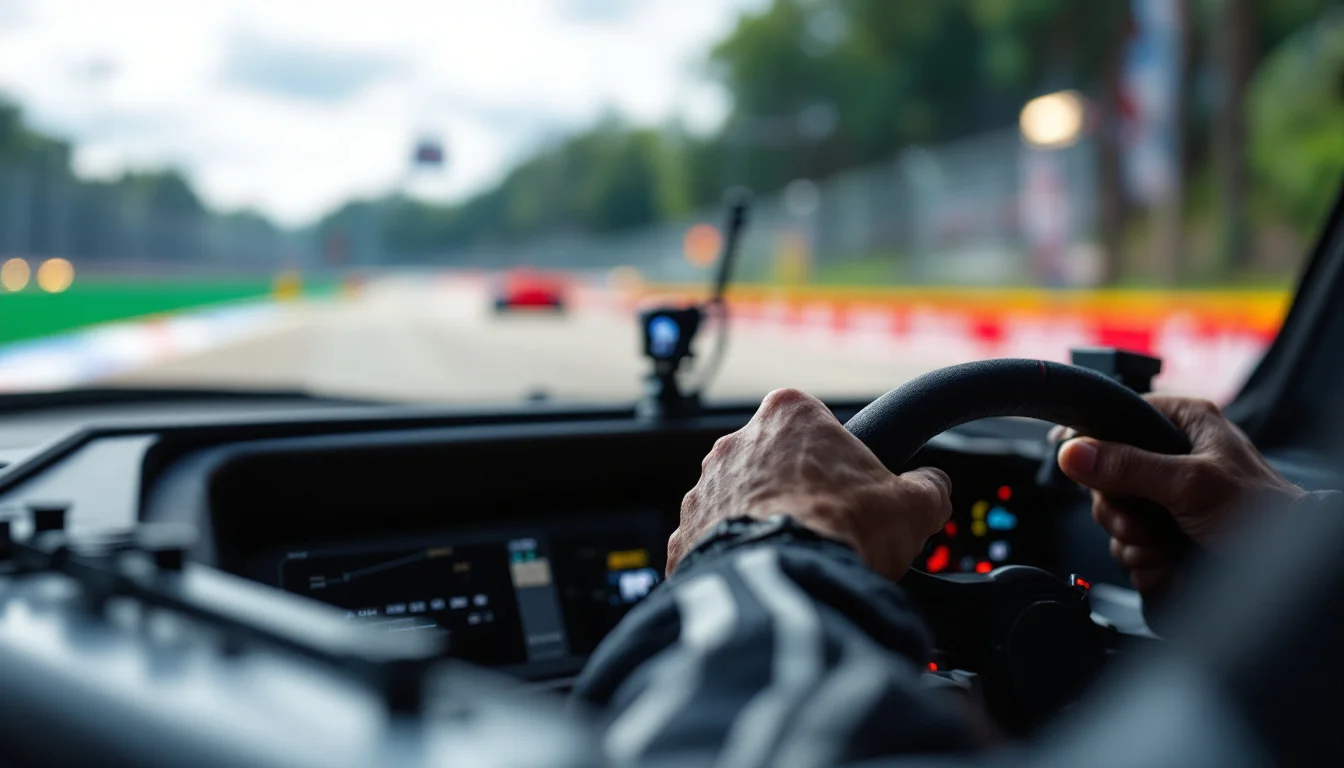
As of 2026, the transition from esports lobbies to physical pit lanes is no longer viewed as a miraculous leap reserved for a few elite gamers. Instead, it has become a structured, biomechanically informed training methodology. Motorsport has moved simulation into the centre of driver development, with national pipelines in Belgium and hardware pricing shifts globally. For sports physiotherapists and strength coaches, this shift aligns with established motor-learning principles: skill acquisition relies on repeated, task-specific practice. Today's commercial and home simulation systems can deliver precisely that. By replicating consistent visual references and demanding genuine physical exertion through advanced hardware and rigid steering columns, the virtual realm can build neurological pathways relevant to real-world driving. This democratised technology provides amateurs a data-driven pathway toward the actual race grid, restructuring the way motor skills are acquired in the sport.
Key Takeaways
- Physical skill transfer: Proper hardware transitions the driver from displacement-based gaming to force-based muscle memory, requiring genuine physical effort to brake.
- Cognitive mapping: Laser-scanned track data allows drivers to rely on consistent visual references, such as track geometry and elevation, in both the simulator and the real world.
- Structured progression: Belgian programmes offer structured curricula to accelerate the transition from simulator sessions to real-circuit competition, though individual timelines vary.
- Cost reduction: Global hardware costs have fallen substantially over the last decade, making higher-fidelity steering systems more accessible for home training environments.
The Biomechanics of Virtual Speed: Why Proper Hardware Translates to the Track
The Physiology of Braking
From a motor-learning perspective, driving fast is largely about mastering deceleration. In traditional console gaming, pedal input is displacement-based: the system merely registers how far the pedal travels, relying entirely on light ankle flexion. However, real-world motorsport relies on hydraulic pressure. According to Viraco (2026), a load cell brake pedal requires significantly more physical force than a console pedal. Because of this mechanical difference, beginners often brake far too gently during their first laps on a proper simulator.To build transferable muscle memory, a driver must train their central nervous system to apply appropriate amounts of pressure in milliseconds. A load cell hardware system more closely mimics the force requirements of a real race car's braking system than a console pedal does. This engages the lower limb musculature in a pattern more consistent with that used on the physical track. The degree to which this transfers across different hardware quality levels and individual athletes varies and has not been systematically studied in peer-reviewed literature; the claims here are informed by motor-learning principles and practitioner reports rather than controlled trials.
The Importance of Structural Integrity
Force-based inputs are less effective if kinetic energy is lost through equipment flex. As detailed by NZ Performance Car (via Speednation), cockpit rigidity matters because the chassis must hold all equipment securely without flexing.If a rig flexes when a driver stamps on the brake, the feedback the brain receives becomes less consistent, potentially undermining the development of repeatable motor patterns. Building reliable reflexes is better served when hardware responds predictably against the human body.
The Cognitive Transfer: How Laser-Scanned Circuits Cut the Learning Curve
Absorbing Errors in a Virtual Environment
Simulators remove financial and physical barriers, allowing drivers to explore the edge of mechanical grip without catastrophic consequences. In a case study documented by The Drive (2020), an author crashed three times within his first four real laps at Daytona, including twice on his very first lap out. He attributes his ability to push boundaries quickly to having had the simulator preparation to absorb those specific mistakes virtually first—though this is a single first-person account and cannot isolate sim training as the sole cause.Quantitative Progression
The speed of skill acquisition in a controlled simulator environment is measurable in some contexts. Leading up to his real race at Daytona, the author trained on iRacing for roughly one to two hours per day for a week. During this short, intense period, his virtual lap times at the track dropped from barely below 2:20 to the low 2:11 range. This progression illustrates the potential of daily, focused repetition, though individual results will vary considerably.Visual References and Neural Mapping
The cognitive transfer can work because the brain processes consistent visual stimuli in both environments. Platforms like iRacing laser-scan real circuits with considerable precision. Consequently, scanned track details—including topography and macro elevation variations—can be used as braking and apex reference points that still exist in the real world.Real-World Execution
When consistent visual references are combined with accurate physical inputs, results can transfer to the actual tarmac. After completing sim preparation on iRacing, the author from The Drive qualified on pole position in his class by 0.2 of a second at a real race at Daytona. This achievement occurred 15 years after his previous visit to the track; the driver attributes his rapid re-acclimatisation to the simulator work, though a single case cannot isolate sim training as the sole cause.The Belgian Pipeline: From Virtual Laps to the VW Fun Cup Grid
Phase 1: Accessible Baseline Testing
In Belgium, the journey from simulation to actual racing has been formalised into a structured training pipeline. The first step involves an accessible, low-risk physical assessment. At Viraco, a simulator session starts from just €17, which covers twelve minutes of free practice and includes a briefing. This provides amateurs an initial opportunity to test load-cell braking and rigid chassis dynamics without committing to a prohibitive upfront financial investment.Phase 2: Immersive Centre Training
As demand for proper biomechanical conditioning grows, local infrastructure is expanding to accommodate it. Viraco states its permanent Experience Centre in Waregem is scheduled to open on 15 October 2026. This expansive facility will house more than ten motion simulators, alongside Pool & Miniracers and a sports lounge. It will establish a dedicated hub where drivers can regularly condition their physical reflexes on high-fidelity, professional-grade equipment.Phase 3: Telemetry and Data Analysis
Once basic car control is established, the training focus shifts heavily to data analysis. Laptime describes its SIM TO REAL programme as a complete path that takes participants step by step from professional simulators directly to the wheel of a real race car. Laptime runs 8 professional simulators as the first stage of its SIM TO REAL programme, covering racing lines, braking points and managing overtakes. Crucially, this programme includes a personal debrief with professional coaches. They cover telemetry, analyse lap times, and assess driving consistency, treating the amateur driver like a professional racing athlete fine-tuning their performance traces.Phase 4: Supervised Track Transition
The final stage blends this virtual proficiency with actual track time. The Laptime curriculum involves mixed sessions that alternate intense simulator work with first supervised track outings. By stepping from the sim rig into a real VW Fun Cup car on track, drivers immediately apply their optimised visual markers and brake pressure profiles in a physical vehicle. The Laptime Fun Cup car, built on a VW Beetle base, is entered in the Belgian Fun Cup championship and races at Spa-Francorchamps, Zolder and Mettet throughout the season.The Six-Month Timeline
This structured methodology can yield rapid real-world results. While some promotional accounts cite a transition from initial simulator trials to the competitive Fun Cup grid in just six months, such timelines are anecdotal, and actual progression depends heavily on a driver's prior athletic baseline, real-world experience, and training volume.The 2026 Home Setup: Building a Training Tool Without Breaking the Bank
The Collapse of the Financial Barrier
While local training centres provide essential coaching and telemetry analysis, the democratisation of higher-end hardware has made daily home conditioning more practical for amateurs. Over the past decade, the global motorsport industry has witnessed a substantial reduction in the cost of professional-grade simulation tools, particularly regarding steering force feedback systems.The Rise of Affordable Direct Drive
As noted by NZ Performance Car (via Speednation), around ten years prior, sourcing a 16Nm direct drive sim racing setup from overseas could easily cost upwards of NZ$5,000. This pricing kept accurate steering resistance locked behind a steep financial wall, limiting it strictly to wealthy enthusiasts and professional racing operations.Today's Market Reality
In 2026, the landscape has shifted considerably. Today, direct drive entry starts at around NZ$600 from a New Zealand retailer. Furthermore, hardware that is comparable to those older, high-end systems now retails for around NZ$1,200. While these specific figures illustrate the New Zealand market, they reflect a wider global industry trend: higher-fidelity force feedback has become more affordable. What was once an exclusive luxury is increasingly accessible as training equipment.Frequently Asked Questions About Sim-to-Real Training
Do you need a real racing licence to start simulator training?
No. Virtual driving centres and home simulation rigs require no licensing. Amateurs can develop fundamental braking techniques, racing lines, and telemetry comprehension before ever applying for a formal track permit with a governing motorsport body.Does a simulator train a driver to handle physical G-forces?
No. Simulators can effectively train specific motor skills and visual processing, but they cannot replicate sustained gravitational loads on the human body. This is an important limitation from a sport-physiotherapy perspective: drivers transitioning to real tracks must supplement their simulator time with targeted strength and conditioning work. In particular, cervical spine endurance, core stability, and upper limb strength may be underprepared by simulator training alone, as lateral and longitudinal G-forces alongside heavy steering loads in real motorsport place demands on the neck, shoulders, trunk stabilisers, and postural muscles that no current consumer-grade simulator adequately reproduces. A structured physical preparation programme should be considered an essential complement to sim training, not optional.What is direct drive technology in sim racing?
Direct drive involves connecting the steering wheel directly to the motor shaft. This reduces the mechanical play and inertia found in older belt- or gear-driven wheels, providing more immediate force feedback that can better mimic real steering column resistance under varying tyre load conditions. However, biomechanical transfer depends heavily on hardware quality, as equipment flex or lower-end load cells can undermine consistency.Conclusion: The Democratisation of Motorsport
The modern simulator does not replace the visceral reality of motorsport; rather, it can help circumvent part of the dangerously steep and financially punishing learning curve that historically bottlenecked the sport. By practising pedal pressures and track geometries digitally, amateurs can arrive at the actual circuit with greater foundational spatial awareness and basic car control. Physical conditioning for real G-force demands, however, remains a critical and irreplaceable complement to simulator work. As hardware costs continue to stabilise across global markets, the next evolution will likely see the wider integration of automated AI telemetry coaching directly into these affordable setups. Access to the grid is no longer defined solely by who can afford to write off a physical chassis, but also by who can most efficiently optimise their virtual preparation.