MotoE's 2026 Demise and the Unlikely Triumph of Electric Hard Enduro
What is the Current State of Electric Motorcycle Racing?
The transition from paved circuits to unpaved trails marks a notable shift in the motorcycle industry. On 11 September 2025, it was announced that the FIM and Dorna Sports agreed to put the MotoE class on hiatus after the 2025 season (Cycle News / MotoGP.com, 2025). Asphalt-based electric racing lost its primary global stage, concluding a run that spanned seven seasons. Having started as a World Cup in 2019 before gaining official World Championship status in 2023, the FIM-sanctioned series ultimately failed to gain sufficient traction within its fanbase.
Yet, rather than signaling the end of battery-powered motorsport, this closure merely redirected engineering efforts toward environments where instantaneous electric torque provides measurable, competitive advantages.
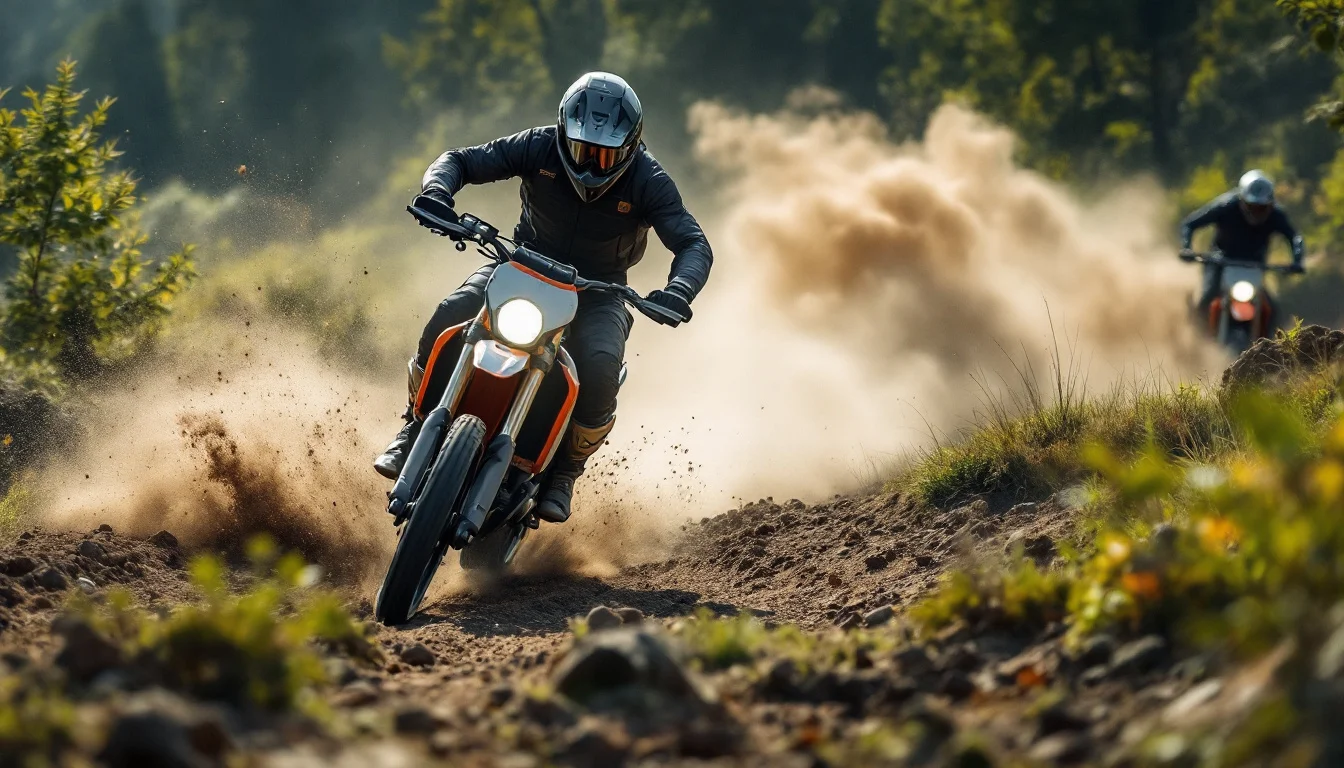
By June 2026, the contrast became evident at the Red Bull Erzbergrodeo. Stark entered its Varg EX machines for the first time in the event's history. Of 500 total competitors, 23 rode Stark Vargs. Only 15 of those 500 starters made it to the finish inside the strict time limit, and two of those finishers were on Stark Vargs. Eddie Karlsson crossed the line ninth overall despite destroying his rear brake in the opening turn and riding the rest of the race on front brake and regenerative braking alone. Teammate Toby Martyn finished twelfth.
This divergence establishes a clear new reality for the motorcycle sector. While official grand prix circuit racing struggled with market relevance and logistical hurdles, extreme hard enduro has organically emerged as the ultimate proving ground. High-performance electric motorcycles are no longer a track-day novelty and are increasingly challenging combustion platforms off-road.
What Are the Key Takeaways for Electric Racing?
- The FIM and Dorna Sports placed the MotoE class on an indefinite hiatus following the 2025 season, ending a seven-year run after citing slower-than-expected market development for electric performance motorcycles and dipping viewership.
- Electric off-road racing marked a notable milestone in 2026, with the Stark Varg platform securing top-10 finishes at major events like the Red Bull Erzbergrodeo (Eddie Karlsson, ninth overall) and the Tennessee Knockout, where riders Eddie Karlsson and Toby Martyn placed fourth and seventh overall, respectively.
- Prototype success was also proven at the 2026 Red Bull Romaniacs, where 51-year-old Graham Jarvis competed in the elite Gold class on an electric motorcycle.
- The electric motor's ability to provide consistent deceleration through energy regeneration — demonstrated when Eddie Karlsson completed the Erzbergrodeo after losing his rear brake — gives a practical competitive advantage that combustion bikes cannot replicate.
Did the Market Fail, or Just the Circuit for MotoE?
The suspension of the MotoE World Championship provides a fascinating case study in how racing organizations interpret consumer trends.
What Was the Official Rationale?
When justifying the decision to pause the series, Dorna cited the fact that "the electric performance motorcycle market has not developed as expected" as a primary reason for shelving the series (Cycle News, 2025). The organization elaborated on this stance, adding that "the motorcycle industry has increasingly pivoted towards the development of even more efficient combustion engines, alongside the use of non-fossil fuels."
From a street-bike perspective, this rationale aligns with the slower adoption of high-performance electric motorcycles on public roads. Organizers attempted to spark interest by switching from Energica's Ego Corsa machine (used from 2019 to 2022) to Ducati's V21L prototype in 2023. Despite the exceptional racing the series produced, the switch did little to stir public interest; viewership dipped, and broadcasters showed limited willingness to air the races. However, applying this justification broadly to all electric performance motorcycles creates a distinct contradiction when observing off-road industry movements during the exact same period.
Is There a Corporate Reality Disconnect?
If the electric motorcycle market were truly failing across the board, major corporate investments would be retracting. Instead, the broader performance market has migrated off-road rather than stalled.
Were There Early Logistical Cracks?
Furthermore, the logistical burdens of MotoE were evident long before the final 2025 hiatus announcement. Traditional racing operations struggled to integrate the electric format into their existing structures. For example, the Belgian team Marc VDS withdrew from the MotoE series.
By 2026, track capacity became completely untenable. The introduction of the Harley-Davidson Bagger World Cup alongside the Red Bull Rookies Cup meant there simply was not enough space in the Grand Prix schedule to run MotoE alongside MotoGP, Moto2, and Moto3. When elite teams step away from a world championship class due to operational friction, it indicates underlying structural issues with the race format itself, independent of global retail market trends.
How Did Electric Bikes Perform at Erzberg and the TKO?
While MotoE dismantled its paddock, electric platforms spent 2026 defeating traditional combustion engines in chaotic environments.
How Was Mechanical Resilience Tested at Erzberg and Romaniacs?
The Red Bull Erzbergrodeo serves as a filter for motorcycle durability. In June 2026, the Stark Varg platform secured a top-10 finish at the event: Eddie Karlsson finished ninth overall after destroying his rear brake in the opening turn and completing the race on front brake and regenerative braking alone — a striking demonstration that electric powertrains can survive, and adapt to, conditions that routinely destroy internal combustion engines.
This resilience was further validated at the end of July 2026 in Sibiu, Romania, at the Red Bull Romaniacs. Competing in the demanding Gold class, veteran rider Graham Jarvis rode his own prototype, the Jarv-E.
What is the Regenerative Braking Advantage?
In a traditional motorcycle, losing a rear brake on a near-vertical descent often results in an immediate withdrawal or a severe crash.
An electric motor can provide consistent deceleration through energy regeneration, as Karlsson demonstrated at Erzberg. This regenerative braking capability is a competitive advantage that combustion bikes cannot replicate.
How Did They Perform at the Tennessee Knockout?
The momentum continued later in the summer, solidifying electric motorcycles as genuine threats against elite factory riders.
At the Red Bull Tennessee Knockout in August 2026, the Stark Varg platform secured another strong result. Eddie Karlsson finished an incredible fourth overall on the Stark Varg, placing ahead of renowned riders Jonny Walker and Cody Webb, and finishing only narrowly behind podium-finisher Billy Bolt. Toby Martyn took seventh place, meaning two electric motorcycles finished inside the top seven of the overall result.
The event even saw grassroots executive participation, with LAND Energy founder and CEO Scott Colosimo entering the race on one of his company's District models—a bike never originally designed for hard enduro. The Stark Varg's success at the Tennessee Knockout shows a repeatable, consistent threat at the highest tier of competition.
Why Did Fast Charging Limit MotoE?
The fundamental difference between the failure of MotoE and the success of electric hard enduro comes down to one technical metric: the speed of energy replenishment.
What Are the Limitations of Asphalt Charging?
MotoE relied heavily on fixed infrastructure and prolonged charging intervals. MotoE bikes required significant time to recharge via integrated DC fast charging technology. While fast charging is reasonable for a highway rest stop, it is an eternity in motorsport.
MotoE's charging requirement limited race formats, restricted scheduling flexibility, and tied the paddock to stationary electrical grid requirements. An electric race bike that ran out of power was effectively out of the session until it charged.
How Does Hard Enduro Use Battery Swapping?
Hard enduro bypassed the DC fast-charging bottleneck by relying on modular physical battery swaps. At the 2026 Erzbergrodeo, modular battery swaps for electric entries were completed quickly, often faster than the time a rider spent catching their breath and drinking water between laps.
Treating the battery as a quick-release canister rather than an integrated chassis component neutralizes the gasoline engine's rapid-refueling advantage.
What is Hitting the Consumer Market?
The successes at Erzberg and the Tennessee Knockout are not confined to prototype racing. The technology is rapidly translating into retail products available directly to European and Belgian consumers.
How Does the InfiniPack System Work?
The InfiniPack system brings elite-level motorsport turnaround times to the local amateur rider. Dutch startup Radian, built by a team with deep roots in electric motorsport, recently unveiled the EXR electric enduro machine. Radian's patent-pending InfiniPack allows the user to fully exchange the battery module in under 30 seconds without tools. Reservations for the EXR are already open in the Netherlands, Belgium, and Germany, with deliveries scheduled for the end of 2027 and a broader European rollout planned thereafter.
Other brands are also expanding the consumer footprint. Slovenian brand STRiX is adapting its military-grade Electric Hard Enduro powertrain for civilian riders, explicitly positioning the bike for hard enduro while eyeing a run at the Dakar Rally's Mission 1000 class. Meanwhile, Bonnell is introducing the 805 RX—featuring a forged aluminum chassis and a swappable battery—aimed squarely at the mid-size electric dirt bike category.
Are Startups the Only Entities Moving Off-Road?
Startups are not the only entities exploring the electric dirt bike market. LiveWire—a publicly traded company majority-owned by Harley-Davidson—has also shown interest in expanding its footprint into the off-road and swappable-battery segments.
FAQ: What is the State of Electric Racing in 2026?
Is MotoE running in 2026?
No. On 11 September 2025, the FIM and Dorna Sports officially agreed to place the MotoE class on hiatus following the conclusion of the 2025 season. After a seven-year run that suffered from dipping viewership, the series is not operating in 2026, as organizers evaluate the broader performance market. Dorna stated there is a chance the series could return should the relevance of electric motorcycles develop in the future.
Did electric motorcycles finish in the top 10 at major hard enduro events?
Yes. At the Red Bull Erzbergrodeo, Eddie Karlsson finished ninth overall on the Stark Varg (completing the race on front brake and regenerative braking after losing his rear brake), while Toby Martyn finished twelfth. At the Red Bull Tennessee Knockout, Karlsson took fourth and Martyn took seventh overall — two electric bikes inside the top seven. Furthermore, Graham Jarvis competed in the Gold class at Red Bull Romaniacs on the electric Jarv-E.
Why is the Future Unpaved?
The divergence of electric motorsport in 2026 shows that attempting to force new technology into legacy formats is associated with significant challenges. Electric performance engineering has stopped trying to replicate the traditional grand prix experience on asphalt.
Instead of being tolerated at the margins of motorsport as a mere marketing exercise, electric off-road motorcycles are now actively qualifying, finishing, and placing highly against the best combustion machinery and riders in the world. Battery-powered motorcycles have found an arena in hard enduro where instantaneous torque mapping and toolless modular energy swaps create a distinct evolutionary leap. The next decade of two-wheeled development will undoubtedly be driven by those willing to leave the paved circuit behind.